The Untold Childhood Stories & Biographies of Football Stars

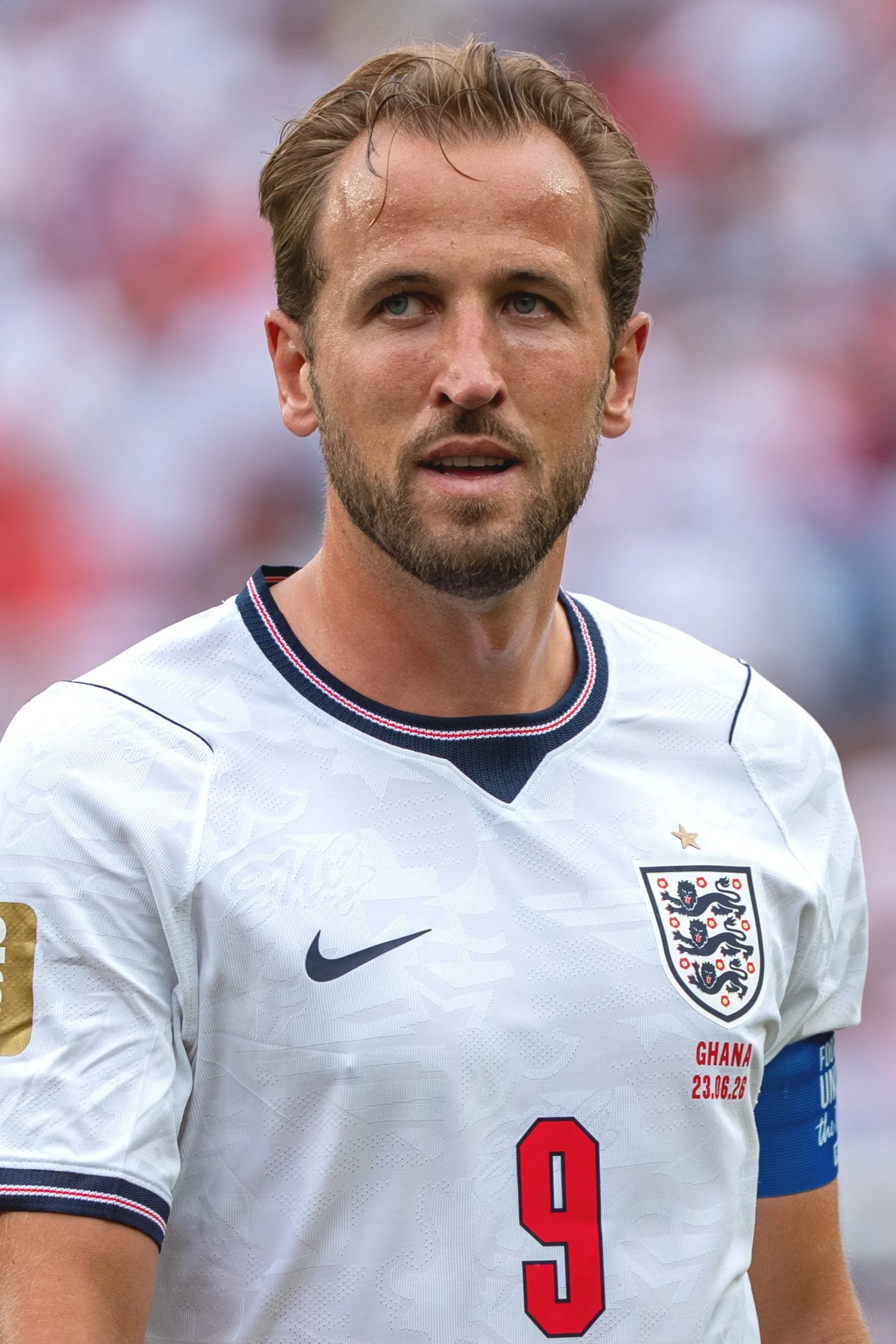
Harry Kane: 73 Goals From Dropping Deep — England Captain Breaks Down His Tactical Evolution
Summary
Harry Kane broke down how dropping deep in Bayern Munich's system helped him score a career-high 73 goals in 2025-26. Full tactical analysis.
14 min read
Table of Contents
- 1 The 73-Goal Season That Rewrote the Conversation
- 2 Kane in His Own Words: “It Doesn’t Work Like That”
- 3 From Number Nine to Number 10, Six, and Everything Between
- 4 The Physical Numbers Behind the Deep Role
- 5 How Kompany Has Engineered It — and Where Kane’s Own Instinct Takes Over
- 6 The Arsenal and Club Brugge Case Studies
- 7 The Modern Pressing Era and Why Kane Has Adapted Better Than Most
- 8 Complementing Teammates: How Kane Reads Personnel
- 9 The Ballon d’Or Case and What the Numbers Don’t Capture
- 10 Related Coverage
- 11 Sources
Harry Kane, England captain and Bayern Munich’s talismanic striker, scored a career-high 73 goals for club and country during the 2025-26 season — a feat he attributes not to staying closer to goal, but to doing the opposite. In a revealing interview with BBC Sport’s football tactics correspondent Umir Irfan, published on September 4, 2026, the 33-year-old explained in forensic detail how dropping as deep as his own penalty box has made him one of the most productive forwards in the history of the game.
The piece, part of BBC Sport’s Gamechangers series on Kane, challenges football’s most persistent cliché — that strikers should simply “stay high” and wait for the ball — while drawing on specific game footage, physical data, and Kane’s own candid reflections on a tactical transformation that has unfolded over nine seasons at the very top of the European game.
The 73-Goal Season That Rewrote the Conversation
When Kane arrived at Bayern Munich in the summer of 2023, the fundamental question was whether England’s record goalscorer could translate Premier League dominance into Bundesliga brilliance. Three seasons on, the numbers speak emphatically. His 2025-26 campaign produced 73 goals in total across club and country — the highest single-season tally of his career. According to Bundesliga.com, 36 of those came in the Bundesliga alone, a return that places him firmly among the elite scorers of any era in German football.
The paradox, as Irfan frames it in the BBC piece, is that Kane achieved this while playing deeper than he has at any previous point in his career — sometimes collecting the ball as far back as his own penalty area. It is a role that confounds casual observation but, when Kane explains it, reveals a sophisticated understanding of how modern high-intensity pressing has reshaped what a centre-forward must do to get space and, ultimately, to score.
Kane in His Own Words: “It Doesn’t Work Like That”
Kane is characteristically measured when confronted with the apparent contradiction between deep play and prolific goalscoring. “Until you really understand football and understand what we’ve been talking about, it’s so easy to say ‘stay high, you’re going to score’ but it doesn’t work like that,” he told BBC Sport.
The key, he explains, lies in reading how opponents structure themselves in the opening minutes and adjusting accordingly. “After the first five or 10 minutes you really get an understanding of how the opposition are going to play, which dictates how I play,” Kane said. “If, for example, I want to drop and see if the centre-back really wants to commit, he might commit into midfield, but is he going to commit if I drop all the way to my box?”
That question — will the centre-back follow? — is at the heart of everything Kane does when he drifts from the penalty area into deeper territories. The answer determines the tactical outcome: if the defender tracks him, a yawning gap opens in behind for a winger or full-back to exploit; if the defender stays, Kane collects the ball as a free man and turns into open space, suddenly functioning as a number ten with the freedom to drive or shoot from range.
From Number Nine to Number 10, Six, and Everything Between
Kane’s own description of his current role is striking in its breadth. “He has described himself as playing in the role of a number 10, nine and six at times,” the BBC piece notes — a characterisation that would have seemed absurd when he was a straightforward penalty-box predator at Tottenham Hotspur a decade ago.
At Bayern under Vincent Kompany, Kane operates primarily as one of two central forwards — a front two in which he shares responsibilities with a partner playing at the same level of the pitch. “I feel like my position now is as one of two 10s, and you work together,” Kane explained. “You can double up on one side to overload, which causes the opposition centre-backs a problem of who to mark. If they want to mark both, they’ve got to go man-to-man and then that leaves space for our wingers or full-backs to run into.”
This creates an almost unsolvable defensive dilemma. When Luis Diaz — who has filled the second striker role in several of Bayern’s most fluent attacking sequences — occupies one zone while Kane drifts into another, opposition back lines are being pulled in competing directions simultaneously. “It’s posing all these questions to the opposition,” Kane said, “but, personally, I love having someone close to me who I can link with.”
The Physical Numbers Behind the Deep Role
Dropping deep across an entire 90-minute match is enormously demanding — a point that is easily lost when the conversation is framed purely around goalscoring. STATSports, a sports technology company in which Kane is himself an investor, tracked his physical output across the past six seasons and found improvements that are striking for a player in his early thirties.
| Metric | Change Over Last 6 Seasons |
|---|---|
| Accelerations | +42% |
| High-Speed Running | +22% |
| Distance Covered | +8% |
The data, sourced from STATSports as cited in the BBC article, underscores a counter-intuitive truth: Kane is not merely doing more work off the ball at the same physical level as before — he is doing more work than he has ever done, at an age when most footballers’ conditioning is plateauing or declining. The combination of increased total distance, sharply higher high-speed running, and a near-50% jump in accelerations suggests a player who has completely rebuilt the engine of his game to match the demands of a broader role.
Further context for these numbers: when Bayern faced Borussia Dortmund in the German Super Cup at the start of the 2026-27 season, Kane completed 90 minutes having had just five days of pre-season training. Bayern won 2-1, and Kane’s involvement — including a notable deep-dropping dribble to escape two Dortmund defenders and open up the pitch from within his own half — was central to the victory.
How Kompany Has Engineered It — and Where Kane’s Own Instinct Takes Over
Bayern manager Kompany provided one of the most illuminating quotes about Kane’s role earlier this year, telling reporters that the system is “50% coached and 50% Kane deciding what to do.” It is a candid admission from a head coach — acknowledging that a portion of what Kane produces on the pitch is simply beyond prescription, that it emerges from a football intelligence that cannot be entirely captured in a training-ground session plan.
Kane himself frames it as instinct refined by experience. “I think it’s partly instinct, using my football brain and getting the feeling on the pitch,” he said. The broader tactical context that Kompany has built at Bayern is one in which rotations are a shared language — teammates trust that whoever occupies a given zone at a given moment will make a decision consistent with the collective plan, even if it looks improvised from the outside.
“The thing with our formation is, as long as there’s someone in each position, it doesn’t really matter who it is,” Kane explained, walking through a specific sequence from last season involving Diaz. “Lucho [Luis Diaz] in this clip is playing as one of those 10s. I’ve come off to try and create a bit of space and Lucho’s gone through the centre.”
In that passage of play, Kane’s movement toward the deep left channel pulled an opposition midfielder toward him, creating a clean passing lane through the centre. Joshua Kimmich threaded the ball into Diaz, who was now operating in a pocket that had been vacated precisely because Kane had drawn his marker away from it. The goal — or the high-quality chance — was the product not of Kane’s individual brilliance, but of his willingness to sacrifice the glamour of being the finishing touch for the utility of making the space.
The Arsenal and Club Brugge Case Studies
Two specific examples from last season illustrate the width of Kane’s tactical influence. In Bayern’s Champions League tie against Arsenal, Kane dropped so deep in the second minute that he occupied a position normally associated with a centre-back. Arsenal defender William Saliba followed him all the way, tracking Kane deep into Bayern’s half. The consequence? Saliba vacated an enormous amount of space higher up the pitch — space that Bayern’s attackers were designed to exploit.
The second example is subtler and, in some ways, even more revealing. Against Club Brugge, the Belgian club chose to assign marking responsibilities on Kane to their holding midfielder rather than a centre-back — a tactical choice presumably made to keep their defensive shape intact. Kane recognised the adjustment almost immediately. “These are the little runs, again, not everyone sees,” he told BBC Sport.
Exploiting the mismatch, Kane made a diagonal run in behind, pulling the holding midfielder out of position. That movement opened a central corridor that teammate Lennart Karl drove into before finishing into the top corner — a goal on which Kane never touched the ball, but whose creation was entirely a product of his movement. “I know Lenny is so good in those pockets,” Kane said, “and when he gets there, I’m more thinking of running in behind because, one, he can play me in and I can go through on goal, or two, he can dribble with the ball and do exactly what happened here.”
It is a mode of contribution that statistical measures almost entirely miss. Goals-per-game, shots-on-target, expected goals — none of these metrics capture the value of a centre-forward who scores 73 goals while simultaneously manufacturing space and goals for others through intelligent, self-sacrificing movement.
The Modern Pressing Era and Why Kane Has Adapted Better Than Most
The tactical context for Kane’s evolution is critical. “Over the last five or six years, man-to-man pressure has become bigger,” he told BBC Sport. “European football is physical and top teams are trying to win the ball back high, trusting their defenders and midfielders to defend man for man to win their battles.”
This shift has made life increasingly difficult for traditional number nines who rely on staying static inside the penalty area, waiting to be found. When opponents press high and man-mark intensely, a static striker is simply a marked man with no route to the ball. The solution — dropping deep to collect outside the press — is not universally adopted, however, because it requires a specific combination of physical fitness, spatial awareness, and passing technique that most centre-forwards do not possess.
Kane’s dribbling, as he acknowledges himself, has never been his primary weapon — he is, by his own admission, “not the fastest.” But the BBC piece highlights a specific moment against Dortmund in the Super Cup that reveals the cerebral quality that substitutes for raw pace: recognising that two defenders had converged on him, Kane got low, used his strength to shrug off centre-back Waldemar Anton, made a micro-adjustment of body position to the right, and then cut sharply back in the other direction — wrong-footing both Daniel Svensson and Jobe Bellingham simultaneously before opening the entire pitch from within Bayern’s half.
“His speed of thought provides him solutions to problems others would attempt to solve with their feet alone,” Irfan writes in the BBC piece. It is an observation that resonates with what Kompany and Kane himself have described: a player who wins his battles through anticipation and decision-making, not athleticism.
Complementing Teammates: How Kane Reads Personnel
One of the most striking aspects of Kane’s game — as revealed in the BBC interview — is how consciously he adjusts his positioning based on which teammates are on the pitch and what they do best. The implication is that Kane doesn’t have a single fixed “deep role” that he executes regardless of circumstances; he reads the game’s personnel and recalibrates in real time.
“With Jamal Musiala and Lenny [Lennart Karl], they’re so good at receiving the ball and dribbling,” Kane explained, “so there’ll be times where I will actually stay higher and let those guys get on the ball a bit deeper, and I’ll try and make runs in behind.”
The logic is elegant: when the player best suited to occupying deep pockets is already doing so, Kane’s marginal value is greatest by moving into the channels and making runs that either receive a through-ball or pull defenders into awkward positions. “Without changing my game too much, I try and complement the players around me,” he said. “As soon as Lenny gets in that pocket I make the run and not always to get the ball, sometimes it is just to drag the defender away.”
That readiness to make runs “not to get the ball” is perhaps the single most un-goalscorer-like thing a talismanic striker can say — and yet, in the context of the 73-goal season it produced, it is also the most compelling evidence that Kane’s tactical framework is working.
Jude Bellingham has similarly been cited as a player who defies simple positional categorisation, thriving in a system that gives him freedom to operate across multiple zones — a theme explored in our coverage of how José Mourinho described Bellingham as a “unique” player and a Ballon d’Or candidate for 2026.
The Ballon d’Or Case and What the Numbers Don’t Capture
With the Ballon d’Or announcement on the horizon, Kane is firmly in the conversation — primarily, as the BBC piece notes, for the sheer volume of goals he has scored. Seventy-three goals in a single season for club and country places him in the company of Cristiano Ronaldo, Lionel Messi, and Erling Haaland at their respective peaks. Any one of those totals, in almost any other era, would represent an automatic shortlisting.
But the full case for Kane — as Irfan’s analysis argues — runs well beyond the goals. When defensive data on his opponents, the Champions League degree of difficulty, the complexity of his physical and tactical workload, and his contribution to teammates’ goals are factored in alongside the raw scoring numbers, the picture that emerges is of a player who is not just a great finisher but an organisational force across all phases of the game.
“Kane plays for the team in each phase of the game across the entirety of the pitch, while at the same time producing extraordinary individual numbers that match the likes of Cristiano Ronaldo, Lionel Messi and Erling Haaland,” the BBC piece concludes. “In a football world of specific and heavily drilled tactical roles, that is quite the achievement.”
Kane himself, speaking to BBC Sport on September 4, 2026, seems little concerned with individual awards. After completing 90 minutes of the German Super Cup win over Dortmund with just five days of pre-season training behind him, the conversation has already moved to the new campaign. His focus, characteristically, is on process rather than recognition. “I think it’s partly instinct, using my football brain,” he said — a line that, in its simplicity, perhaps captures the entire paradox of a career-high 73-goal season built on playing like a midfielder.
The full in-depth tactical breakdown, including frame-by-frame photo galleries from the Arsenal, Eintracht Frankfurt, and Club Brugge sequences, is available in Umir Irfan’s BBC Sport feature published on September 4, 2026. Additional physical tracking data was provided by STATSports, the sports technology company whose wearable data underpins the analysis of Kane’s distance, high-speed running, and acceleration metrics across the past six seasons.
Related Coverage
- Premier League Breaks All-Time Transfer Spending Record at £3.198bn in Summer 2026
- Alexander Isak Scores But Liverpool Draw 2-2 With Forest: How Does Iraola Unlock His £125m Striker?
- Chelsea Agree £7.5m Deal to Sign Emiliano Martínez from Aston Villa
Sources
- 73 goals from dropping deep – we ask Kane to break down how he did it — bbc.com
- STATSports — statsports.com
- Why Harry Kane dropping deep might win England the World Cup — bbc.com
- Harry Kane explains his tactical evolution at Bayern Munich – BBC — bbc.co.uk
- Premier League – Game Changers: Harry Kane Explains His Tactical Evolution — bbc.co.uk
Photo: Bryan Berlin, CC BY-SA 4.0, via Wikimedia Commons
📷 Image credits — Hero: Bryan Berlin · CC BY-SA 4.0 · Wikimedia Commons