The Untold Childhood Stories & Biographies of Football Stars

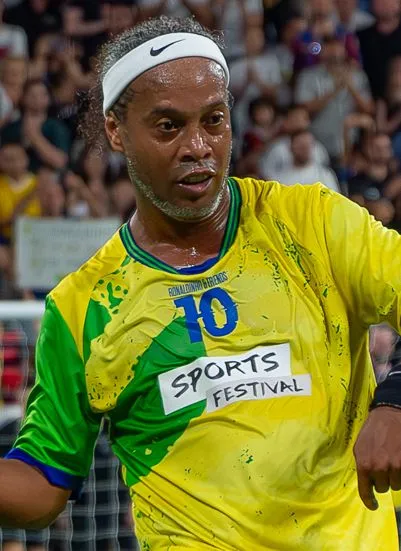
Ronaldinho, 46, Unveiled at Ravenna FC Aiming to Score 300th Career Goal
Summary
Ronaldinho was officially unveiled at Italian third-tier club Ravenna FC on August 20, 2026, ending an 11-year retirement at 46 to chase his 300th career goal.
12 min read
Table of Contents
- 1 Ronaldinho’s Own Words: Happiness, Friendship, and One More Goal
- 2 Ravenna Owner Cipriani: ‘Not a Marketing Stunt’
- 3 The Story Behind the Signing: From World Cup Announcement to Ravenna Day
- 4 A Career That Defined an Era: From Porto Alegre to the Ballon d’Or
- 5 The 300-Goal Target: Context and Significance
- 6 Career Statistics at a Glance
- 7 Braida’s Involvement: A Symbol of Credibility
- 8 How the Football World Has Reacted
- 9 What Happens Next: Serie C, the 300th Goal, and a City’s Dream
- 10 Related Coverage
Former Ballon d’Or winner and Brazil World Cup champion Ronaldinho was officially unveiled as a player and shareholder at Italian third-tier club Ravenna FC on August 20, 2026, ending an 11-year retirement at the age of 46 with the stated ambition of scoring the 300th goal of his professional career. Thousands of supporters lined the beaches of Marina di Ravenna — braving rain — to witness a moment that many in Italian football had initially dismissed as a hoax when the signing was first announced in June.
The Brazilian legend touched down at Forlì airport aboard a private jet from Milan Linate at 11:50am local time on August 20, dressed in a floral shirt and Bermuda shorts, his trademark flat cap completing the picture. He proceeded to undergo a standard medical examination before a press conference at Monaldina — the historic Gardini-Ferruzzi family residence — where he was flanked by Ravenna’s sporting director Paolo Scocco and vice-president Ariedo Braida. The formal unveiling drew extraordinary global media attention and confirmed what had seemed, to many, too extraordinary to be real, according to BBC Sport.
Ronaldinho’s Own Words: Happiness, Friendship, and One More Goal
Speaking at the unveiling, Ronaldinho — born Ronaldo de Assis Moreira on March 21, 1980, in Porto Alegre, Brazil — kept his message simple and emotional. “I’m very happy to be here with friends. We have a team that can do something good,” he told the assembled media. “Coming back to Italy is wonderful. I’m here to help my teammates win.”
Asked directly whether fans would see him play, Ronaldinho was diplomatically non-committal: “Will you see me play? I don’t know, only the coach knows that.” He then addressed the single sporting target that has defined the narrative around his return. “As you can see, I’m in shape, I feel good… If I could score my 300th goal, that would be even more beautiful.”
When pressed on what drew him to Romagna — a region of central Italy far removed from the glamour of the Serie A clubs he graced in his prime — Ronaldinho’s answer was consistent and simple: “Friendship and passion are the keys that brought me back here.” His mission, he added, was to “bring happiness and love” to Ravenna’s community. “I just arrived, but I have a great desire to live this experience with the whole city,” he said, as reported by The Guardian’s Emanuele Giulianelli from Ravenna.
Ravenna Owner Cipriani: ‘Not a Marketing Stunt’
Ignazio Cipriani, the Italian-American businessman who has owned Ravenna FC since 2024 and is a scion of the family behind the globally renowned Harry’s Bar brand, was emphatic in pushing back against scepticism about the deal’s sincerity. “His objective is romantic, to try to score his last goal,” Cipriani said at the press conference on August 20. “His involvement is not a token gesture or a marketing stunt to get people talking about us.”
Cipriani revealed that, like Ronaldinho himself, the key to persuading the legend out of retirement came down to two words: “Friendship and passion.” The owner also confirmed that Ronaldinho would not feature in Ravenna’s Serie C season opener against Reggiana on Monday, August 25, 2026 — a prudent decision that underlines the club’s measured approach to managing the comeback.
Ronaldinho’s role at the club is dual-natured. He is becoming a shareholder in Ravenna FC — a business partner in the club’s ownership structure — while simultaneously registering as an active player with the intention of featuring on the pitch. Ariedo Braida, the veteran executive serving as Ravenna’s vice-president, captured the city’s mood with characteristic brevity: “We have the magic of football in Ravenna. What more could we ask for?”
The Story Behind the Signing: From World Cup Announcement to Ravenna Day
The origin of this extraordinary story dates to June 19, 2026, when Ravenna FC broke the news of Ronaldinho’s signing at 10pm local time — with football’s collective attention largely focused on the FIFA World Cup being held in the United States. The timing contributed to widespread disbelief. The announcement seemed too spectacular to take at face value, and in both the city of Ravenna and worldwide football circles, debate raged over whether this was a genuine sporting comeback or an elaborate publicity exercise.
Cipriani, who was attending World Cup matches in Miami when the signing was first announced, had spoken at the time of Ronaldinho’s “romantic” objective. Months of questions, speculation, and anticipation followed until August 20’s unveiling — branded “Ronaldinho Day” by the club — finally put all doubts to rest. The Brazilian’s arrival by private jet, his medical examination, and his presence at the formal press conference all confirmed what had seemed impossible: Ronaldinho, at 46, was genuinely back.
Ravenna, a city on Italy’s Adriatic coast better known historically for its Byzantine mosaics than its football pedigree, has responded with extraordinary enthusiasm. The club finished third in Group B of last season’s Serie C championship and is targeting a return to Serie B — Italy’s second tier — from which they have been absent since 2008. The Ronaldinho effect has already transformed the club’s public profile far beyond anything Serie C ordinarily generates.
A Career That Defined an Era: From Porto Alegre to the Ballon d’Or
To understand why Ronaldinho’s return commands global headlines, it is necessary to revisit what he achieved at the peak of his powers. Born in a working-class neighbourhood of Porto Alegre in southern Brazil, Ronaldo de Assis Moreira grew up as the younger brother of Roberto Assis, himself a professional footballer who played a crucial role in nurturing his sibling’s talent. His nickname, Ronaldinho Gaúcho — meaning “Little Ronaldo from Rio Grande do Sul” — distinguished him from the similarly-nicknamed Ronaldo Nazário (known as “R9”), his compatriot and contemporary.
Ronaldinho came to global prominence at Grêmio in Porto Alegre before moving to Paris Saint-Germain in 2001. It was at Barcelona, where he arrived in 2003 for approximately €30 million, that he became the defining footballer of his generation. Under manager Frank Rijkaard, he helped Barcelona win back-to-back La Liga titles in 2004-05 and 2005-06, and the UEFA Champions League in 2006. He was named FIFA World Player of the Year in 2004 and 2005, and claimed the prestigious Ballon d’Or award in 2005 — the pinnacle of individual achievement in world football.
His impact at Camp Nou was so profound that when he scored twice against Real Madrid at the Bernabéu in November 2005, an enraptured home crowd gave him a standing ovation — a gesture of respect almost unprecedented in the fiercest rivalry in football. The image of Ronaldinho celebrating, teeth gleaming in a smile, with the white-shirted Bernabéu crowd on its feet behind him, remains one of the sport’s most iconic photographs.
After Barcelona, he moved to AC Milan in 2008, where he won the FIFA Club World Cup in 2007 (retroactively speaking, during his Barça spell). At international level, he was central to Brazil’s 2002 World Cup triumph, scoring the winning free-kick goal in the quarter-final against England at Shizuoka — a strike that looped over goalkeeper David Seaman in one of the competition’s most debated moments. He scored 33 goals in 97 appearances for the Brazilian national team, retiring from international football in 2013.
His club career wound through Flamengo, Atlético Mineiro, Querétaro in Mexico, and finally Fluminense, where he played his last official professional match in September 2015. The Brazilian’s career tally currently sits at approximately 299 career goals — the precise target that gives this comeback its almost storybook framing.
The 300-Goal Target: Context and Significance
Ronaldinho’s stated objective of reaching 300 career goals is not merely a round-number milestone — it reflects a career spent predominantly as a creative midfielder and playmaker rather than a centre-forward. Unlike contemporaries who accumulated goal tallies purely as strikers, Ronaldinho’s goals were scored across a wide variety of positions and contexts: direct free-kicks, audacious long-range strikes, delicate chips, headers, and penalties.
According to Transfermarkt’s career statistics database, Ronaldinho’s documented goal tally across official club and international matches places him in the range of the goal count he has cited as his target. Reaching 300 in Serie C with Ravenna would add a uniquely democratic chapter to a biography that has already taken him from the Camp Nou to the Bernabéu, from the Maracanã to the San Siro.
The notion of a former Ballon d’Or winner seeking one final goal in the third tier of Italian football is simultaneously quixotic and compelling — and it is a narrative that resonates globally in a way that no Serie C story has managed in living memory. Ariedo Braida’s reference to former AC Milan teammate Kevin-Prince Boateng‘s 2016 assessment — that Ronaldinho ranks above Pelé, Maradona, Messi, and Cristiano Ronaldo in the greatest player of all time debate — captures the scale of talent that Ravenna has, against all probability, acquired.
Career Statistics at a Glance
| Club / Stage | Spell | Notable Achievement |
|---|---|---|
| Grêmio (Brazil) | 1998–2001 | Breakthrough in Brazilian football |
| Paris Saint-Germain | 2001–2003 | Ligue 1 career, global recognition grows |
| FC Barcelona | 2003–2008 | Ballon d’Or 2005, Champions League 2006, 2× La Liga |
| AC Milan | 2008–2011 | Serie A winner 2010-11 |
| Brazil (International) | 2002–2013 | World Cup 2002, 33 goals in 97 caps |
| Fluminense (final match) | September 2015 | Last official professional appearance before retirement |
| Ravenna FC (Serie C) | August 2026– | Comeback at 46 — targeting 300th career goal |
Braida’s Involvement: A Symbol of Credibility
One of the more striking elements of Ronaldinho’s Ravenna move is the presence of Ariedo Braida as the club’s vice-president. Braida, 80, is one of the most respected and experienced executives in world football, having served as AC Milan’s sporting director for 25 years under Silvio Berlusconi — a period during which he helped assemble some of the club’s greatest sides, signing players including Ronaldinho himself in 2008.
Braida’s credibility lends a weight of seriousness to Ravenna’s ambitions that a lesser-known club in the Italian third tier might otherwise struggle to project. His presence signals that while the Ronaldinho signing has a romantic dimension, those behind the operation understand the football business at the highest level. Braida’s remark — “We have the magic of football in Ravenna. What more could we ask for?” — was not the comment of a man overawed by events, but of a seasoned professional acknowledging something genuinely extraordinary.
How the Football World Has Reacted
Reaction to Ronaldinho’s unveiled comeback has ranged from delighted to disbelieving across the global football community. On social media platforms, the #RonaldinhoDay hashtag trended in multiple countries. Former teammates and contemporaries shared tributes and expressions of amazement, with the consensus being one of warmth toward a player who — perhaps more than any other of his generation — embodied pure joy in football.
In Italy, the football press has been broadly positive while acknowledging the commercial dimensions of the move. The question of whether Ravenna can genuinely integrate a 46-year-old — however iconic — into competitive Serie C fixtures has been raised by analysts. Cipriani’s confirmation that Ronaldinho will not play in Monday’s opener against Reggiana suggests a cautious approach: there is no desire to rush him onto the pitch in a way that could prove embarrassing or physically harmful.
Globally, coverage has framed the story through the prism of legacy and aspiration. The biography of football legends — how they handle retirement, the legacies they build, and the moments that define their final chapters — remains a subject of intense public interest. Ronaldinho’s case is unique: unlike many retired players who seek roles in management, punditry, or business, he is asking to be judged on the pitch one more time, at an age when the vast majority of professional footballers have been retired for well over a decade. For more on the untold biographical stories behind football’s greatest names, our feature on Harry Kane’s own reflections on football, legacy and retirement offers a parallel perspective on how elite players confront the end of their careers.
What Happens Next: Serie C, the 300th Goal, and a City’s Dream
Ravenna FC’s 2026-27 Serie C season begins on Monday, August 25, 2026, with a home fixture against Reggiana. Ronaldinho will not feature in that match, but the entire Italian third tier — and much of the wider football world — will be watching for his first competitive appearance. The club, which finished third in Group B last season and aspires to promotion back to Serie B for the first time since 2008, will hope that the Ronaldinho effect translates into both on-field energy and off-field commercial growth.
Whether Ronaldinho can actually contribute meaningfully on the pitch remains the central unanswered question. Playing competitively after an 11-year absence at age 46 is a physiological challenge unlike almost anything in the history of professional football. The precedents for iconic players returning at such an advanced age and such a long absence are essentially non-existent at this level. Ronaldinho has said he is “in shape” and “feels good” — Cipriani has confirmed the player is physically prepared — but the gap between training fitness and competitive football fitness is significant.
The 300th goal, if it comes, would be a moment of pure football romance — a final flourish from the player widely regarded as the most joyfully gifted footballer of the post-Maradona, pre-Messi era. If it does not come, Ronaldinho’s legacy is, of course, entirely untouched: two Ballon d’Or nominations, one winner’s trophy, a World Cup medal, and the Bernabéu standing ovation tell a complete story that needs no postscript.
What Ravenna FC has done — regardless of what happens next on the pitch — is remind the world that football, at its most human, is about exactly what Ronaldinho said at the press conference: friendship, passion, and the desire to bring happiness to a city. In that sense, the 300th goal may already be scored.
Sources: BBC Sport reporting by Mike Peter (published August 20, 2026); The Guardian reporting by Emanuele Giulianelli from Ravenna (published August 20, 2026); AFP via Jamaica Observer (published August 20, 2026).
Related Coverage
- Harry Maguire Backs Marcus Rashford to Stay at Manchester United as Transfer Window Nears Close
- Harry Maguire Backs Marcus Rashford to Stay at Manchester United After Pre-Season Return
- Arsenal Agree £51m Deal to Sign Ezri Konsa From Aston Villa
Photo: Nuță Lucian, CC BY-SA 2.0, via Wikimedia Commons