The Untold Childhood Stories & Biographies of Football Stars

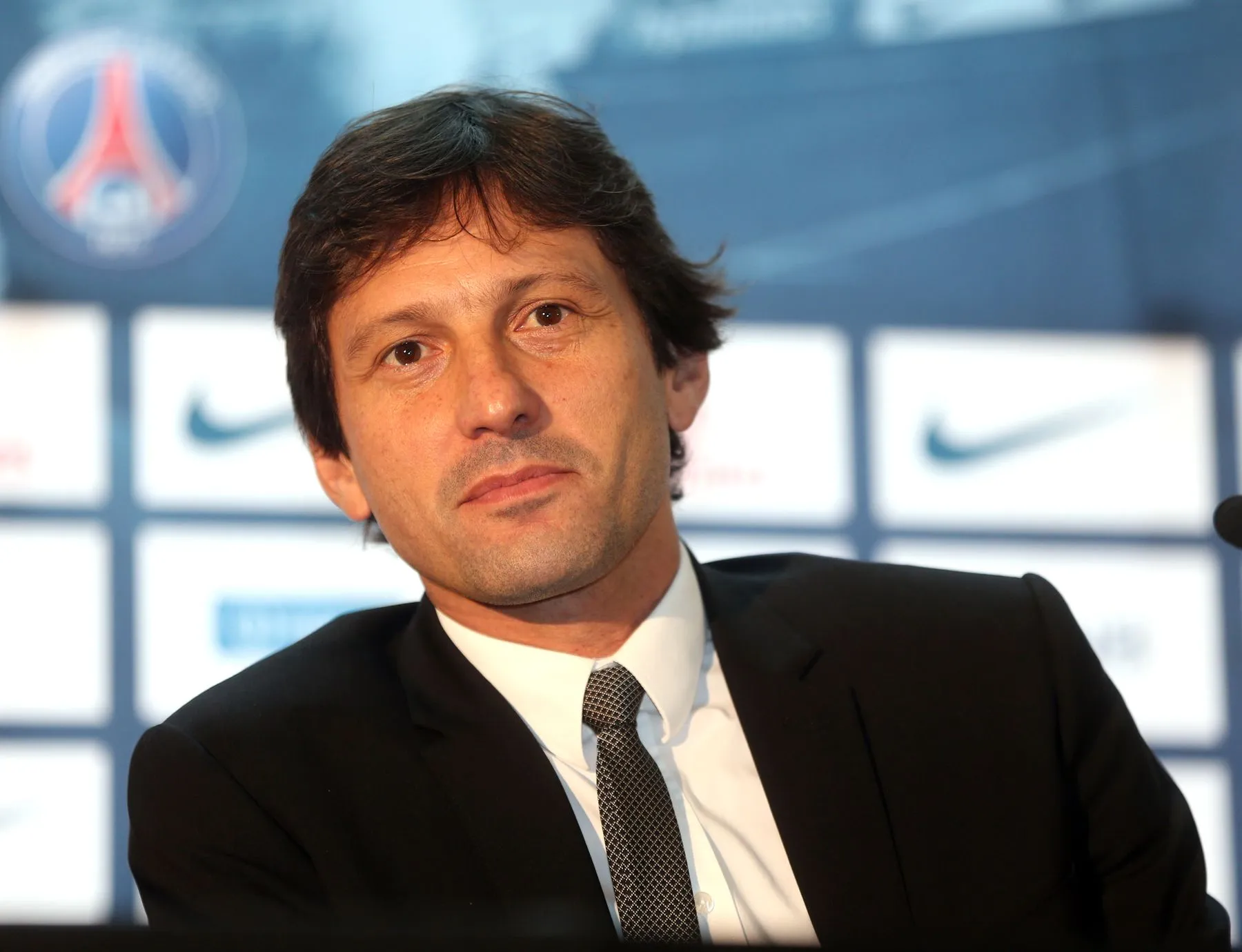
Richard Hughes Steps Down as Liverpool Sporting Director, Set to Join Al-Hilal
Summary
Richard Hughes has stepped down as Liverpool sporting director on Sep 5, 2026, and is set to join Al-Hilal. Full details on his tenure, transfers, and what happens next.
12 min read
Table of Contents
- 1 From Bournemouth to Anfield: A Rapid Rise Through Football Administration
- 2 The Post-Klopp Transition: Hughes’s Central Role
- 3 The Edwards Departure and Its Cascading Effect
- 4 Key Decisions and Transfer Record During Hughes’s Tenure
- 5 Hughes’s Relationship With Andoni Iraola
- 6 Liverpool’s Succession Problem: Who Fills the Vacancy?
- 7 The Wider Context: Saudi Arabia’s Continued Pull on Football Executives
- 8 What Happens Next at Liverpool
- 9 Sources
Richard Hughes stepped down as Liverpool‘s sporting director on September 5, 2026, the club confirmed, ending a two-year stint in which he oversaw the Anfield club’s difficult transition away from the Jürgen Klopp era — and is now expected to join Saudi Pro League giants Al-Hilal, according to Reuters and BBC Sport.
Hughes, 47, had been appointed Liverpool’s sporting director in March 2024 and officially began the role in June 2024 after concluding his tenure as technical director at Bournemouth. His departure had been widely anticipated, with BBC Sport reporting in July 2026 that he was not expected to sign a new deal beyond the expiry of his current contract in June 2027. He now leaves the club having presided over some of the most consequential decisions in recent Liverpool history, including the sacking of Arne Slot in May 2026 and the subsequent appointment of Andoni Iraola as head coach.
The announcement came on the same day Liverpool recorded their first Premier League win of the 2026-27 season, with Alexander Isak‘s early brace securing a 2-0 victory over Ipswich Town — a result Iraola described as feeling “good” in his post-match press conference. Hughes’s exit nonetheless lands as a significant structural development for a club already navigating upheaval at the top of its football operations.
From Bournemouth to Anfield: A Rapid Rise Through Football Administration
Richard Hughes did not take the traditional route into football operations. Born and raised in the UK after an early stint as a youth player with Atalanta in Italy, Hughes later played professionally in Scotland as a midfielder before transitioning into football administration, where he found his true vocation. His rise through the executive ranks was built on an eye for coaching talent and a clear footballing philosophy — qualities that first drew Liverpool’s attention while he was still at Bournemouth.
As Bournemouth’s technical director, Hughes became a central architect of what many observers described as a small-club model done right. His most celebrated decision in that role was the appointment of Andoni Iraola as Bournemouth head coach in the summer of 2023. Bournemouth owner Bill Foley later confirmed that Hughes was the driving force behind that hire, having convinced the American businessman that the relatively unknown Basque coach was the right man for the job. The decision proved transformative: under Iraola, Bournemouth became one of the Premier League’s most tactically progressive sides and, by the end of the 2025-26 season, had achieved European qualification for the first time in the club’s history.
That record of identifying and backing Iraola made Hughes an attractive target for Liverpool when they were searching for a new sporting director to navigate life after Klopp. The club confirmed his appointment on March 20, 2024, with Hughes quoted by the club as saying that what truly inspired him about Liverpool was its “present and future.” He officially assumed the role in June 2024.
The Post-Klopp Transition: Hughes’s Central Role
When Hughes arrived at Anfield, his primary mandate was clear: help Liverpool navigate the end of the Klopp era and build a structure capable of sustaining the club’s ambitions without its most successful manager in decades. That challenge proved more complex than even the most sceptical observers predicted.
Arne Slot had been appointed as Klopp’s successor and delivered an immediate title, winning the Premier League in his debut season in 2024-25. However, the following campaign unravelled sharply, and on May 30, 2026, Liverpool confirmed that Slot had been sacked — just one year after his title triumph. According to BBC Sport’s reporting, the decision to dismiss Slot was made jointly by Hughes and then-chief executive of football Michael Edwards. It was Hughes who delivered the news directly to Slot that his tenure had concluded.
Immediately, Hughes began the process of finding a replacement. Having backed Iraola so emphatically at Bournemouth, he was the strongest internal voice for bringing the Basque coach to Anfield. Liverpool began talks with Iraola on June 2, 2026, just days after Slot’s sacking, and confirmed his appointment on June 4, 2026 on a two-year deal. When Iraola was unveiled publicly on July 13, 2026, The Guardian noted that the Liverpool manager spoke with a striking humility about proving himself at a club of Liverpool’s stature — a demeanour that had been one of the qualities Hughes had consistently cited when making the case for his appointment.
The Athletic reported in June 2026 that Hughes had been personally close to Iraola throughout the Bournemouth years and maintained that friendship during the process. As The Athletic put it, “whether rightly or wrongly, the new manager will likely be seen as Hughes’ ally, given their previous collaboration at Bournemouth.” That tight bond was both an asset and a vulnerability: Hughes’s professional credibility at Liverpool was, in many respects, now tied to how Iraola performed.
The Edwards Departure and Its Cascading Effect
The context for Hughes’s exit cannot be understood without accounting for the departure of Michael Edwards. The Guardian reported on July 10, 2026 that Edwards had resigned as chief executive of football for Fenway Sports Group — the Liverpool ownership group — having been the most senior figure in the club’s football operations. Edwards’s exit, combined with the imminent departure of Hughes, meant that Liverpool were losing both executives who had driven the decision to appoint Iraola within the space of weeks.
Football Transfers reported in July 2026 that Liverpool were already anticipating Hughes’s exit by that point, with sources close to the club confirming that the former Bournemouth chief was expected to leave after the conclusion of the summer transfer window. That window closed on September 1, 2026 — four days before Hughes formally stepped down. The timing of his exit suggests that Hughes stayed on specifically to see the transfer business through to its conclusion before departing.
As reported by BBC Sport in July 2026, Hughes was expected to join Al-Hilal in a sporting director capacity alongside his former Bournemouth colleague Simon Francis. Francis, who played under multiple managers at Bournemouth before moving into a technical role, had previously been linked with Al-Hilal as part of the Saudi club’s broader strategy of hiring British football executives to bolster its football department. Liverpool.com noted in September 2026 that Hughes’s move to Al-Hilal could prove awkward for Liverpool given that the Saudi club are well-positioned in transfer markets where Liverpool are also active.
Key Decisions and Transfer Record During Hughes’s Tenure
Hughes oversaw two full summer transfer windows as Liverpool’s sporting director: summer 2024 and summer 2026, as well as the January 2025 window. Among the most prominent pieces of business conducted during his time at the club was the overall squad planning around Iraola’s arrival — a rebuild conducted at pace once the managerial succession was confirmed in June 2026.
The scale of that summer 2026 rebuild was significant. According to reports during the window, Liverpool were active in multiple positions under the direction of Hughes and the recruitment team, though full details of the business will continue to emerge in the coming weeks. Hughes’s track record at Bournemouth — where he had consistently identified undervalued players for cost-effective fees — was cited as one of his key attributes when Liverpool appointed him in 2024.
Livescore.com noted in August 2026 that Hughes’s exit had already prompted questions about the coherence of Liverpool’s summer spending, with some observers suggesting that a sporting director overseeing a major rebuild and then leaving immediately after could create structural gaps. Hughes’s supporters, however, argued that the window had been planned meticulously and that the transition had been professionally managed.
| Period | Role | Club | Key Outcome |
|---|---|---|---|
| Sep 2026 onwards | Sporting Director (expected) | Al-Hilal | Move confirmed post-window |
| Jun 2024 – Sep 2026 | Sporting Director | Liverpool | Oversaw Slot exit; appointed Iraola |
| 2021 – Jun 2024 | Technical Director | Bournemouth | Appointed Iraola; first European qualification |
Hughes’s Relationship With Andoni Iraola
The professional relationship between Hughes and Iraola is central to understanding the story of Liverpool’s recent history. Hughes did not merely recommend Iraola at Bournemouth — he championed the appointment strongly enough to convince an initially sceptical ownership group, and he repeated that conviction in persuading Liverpool’s hierarchy to choose Iraola over other candidates in the summer of 2026.
At Iraola’s Liverpool unveiling on July 13, 2026, The Guardian reported that the head coach acknowledged the significance of the trust that had been placed in him, speaking about the need to “prove I belong here” despite his exceptional record in the Premier League with Bournemouth. Part of what he had to prove, implicitly, was that Hughes’s judgment — now under scrutiny given the upheaval of the Slot sacking — had been sound.
The Athletic observed in June 2026 that the optics of Hughes’s eventual departure were complicated: leaving immediately after the window in which Iraola’s squad had been built meant stepping away before the fruits of that work were properly visible. For Hughes, the timing was practically clean — the transfer work was done. For Liverpool, it left a question about institutional memory and continuity in football operations. For more on how Liverpool have managed the managerial succession this summer, see our earlier coverage on the summer’s major transfer stories.
Liverpool’s Succession Problem: Who Fills the Vacancy?
With both Edwards and Hughes now gone from Liverpool’s senior football operations structure, the club faces a significant challenge in rebuilding its executive team around Iraola. The role of sporting director — long considered essential to modern football’s most successful clubs — will need to be filled at a moment when Iraola is still in the earliest stages of his tenure at Anfield.
No announcement on a successor to Hughes had been made as of September 5, 2026. That silence is notable: the start of a new Premier League season is not an ideal moment for a club to be operating without a sporting director, particularly when decisions about squad registration, contract management, and potential winter window planning will begin to accumulate quickly.
Fenway Sports Group, which owns Liverpool, will need to decide whether to appoint a permanent replacement quickly or operate in an interim capacity for a period. The precedent from the Edwards-to-Hughes transition in 2024 — which moved relatively smoothly — suggests FSG prefers to have identified a successor before making a public announcement. Whether such groundwork has been done this time will become clearer in the coming days.
Some analysts have suggested that Hughes’s departure, combined with Edwards’s earlier exit, could accelerate FSG’s thinking around the overall structure of football operations at the club. The current model — a relatively lean executive team sitting above the head coach — was credited with the agility that enabled the rapid Iraola appointment in June 2026, but it also makes individual departures more consequential.
The Wider Context: Saudi Arabia’s Continued Pull on Football Executives
Hughes’s expected move to Al-Hilal is part of a broader trend that extends well beyond players. The Saudi Pro League’s ambitious clubs have not limited their recruitment to footballers alone — they have increasingly targeted sporting directors, technical staff, and other football executives with offers that are difficult to match in European football.
For Hughes, the appeal of Al-Hilal is likely multifaceted. The financial terms will almost certainly be more generous than what Liverpool were offering. There is also the professional dimension: Al-Hilal have been investing heavily in building a modern football structure, and arriving alongside a familiar face in Simon Francis offers continuity. Whether the Saudi Pro League can offer the prestige or competitive challenge of the Premier League is a separate question — but for an executive at a mid-to-senior career stage, the combination of security, resources, and a genuine project to build is compelling.
The pattern echoes what has been observed across the playing side of the game. As we reported when English players dominated the most expensive nationalities in the summer 2026 transfer window, the economics of modern football — driven in part by Saudi investment — are reshaping where careers are built and ended, at every level of the game.
What Happens Next at Liverpool
In the immediate term, Iraola and his coaching staff will manage the day-to-day football operation while FSG works to resolve the sporting director vacancy. Liverpool’s September fixture list is already packed, with European commitments alongside the Premier League schedule, making stability at the top of football operations a practical necessity rather than merely a longer-term concern.
For Hughes himself, the transition to Al-Hilal is expected to happen quickly now that the transfer window has closed and his Liverpool obligations are formally concluded. Reports cited by Tribuna.com on August 31, 2026, said that Hughes would join the Saudi club in September — a timeline consistent with the September 5 announcement of his departure from Anfield.
The broader question of what his legacy at Liverpool will be remains genuinely open. Two years is a short tenure by any measure, and the decisions he made — particularly the Slot dismissal and the Iraola appointment — will take time to be properly assessed. If Iraola proves a success at Anfield, Hughes will be remembered as the executive who identified the right man for one of the biggest jobs in world football. If the project falters, the scrutiny will be sharper — and his early departure will be cited by critics as another data point in a turbulent two years.
What is not in doubt is that the story of Liverpool’s post-Klopp restructuring has entered a new chapter. The sporting director who navigated the most sensitive transition in the club’s recent history has left the building — and Anfield will be watching closely to see who takes his place.
Sources
- Reuters — reuters.com
- Richard Hughes steps down as Liverpool sporting director — bbc.co.uk
- Official: Richard Hughes Leaves Liverpool FC to Join Al-Hilal — thisisanfield.com
- Liverpool "Satisfied" Hughes Was Not Also Working for Al- … — thisisanfield.com
- Richard Hughes set to leave Liverpool and join Al Hilal in September — tribuna.com
Photo: Doha Stadium Plus Qatar Photograph: Mohan (www.dohastadiumplusqatar.com), CC BY 2.0, via Wikimedia Commons