The Untold Childhood Stories & Biographies of Football Stars

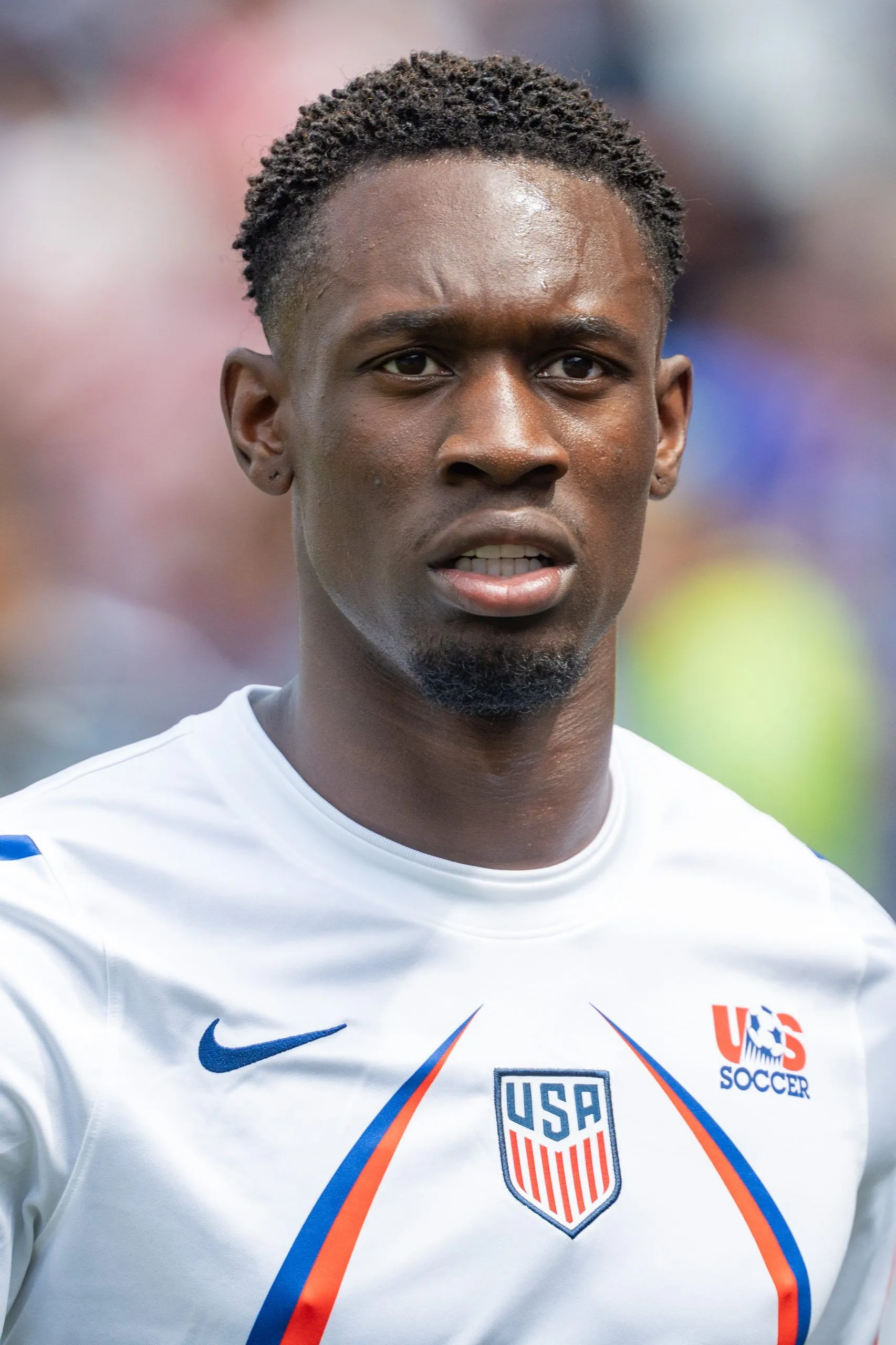
Folarin Balogun’s £40m Everton Move Collapses After Failed Medical, USMNT Striker Stays at Monaco
Summary
Folarin Balogun's £40m move from Monaco to Everton collapsed on September 1, 2026, after a failed medical. Full timeline, career stats and what happens next.
11 min read
Table of Contents
- 1 A Deal That Moved at Lightning Speed — Then Fell Apart
- 2 The Arsenal Sell-On Clause and the Financial Landscape
- 3 Who Is Folarin Balogun? Career Timeline and Key Stats
- 4 The “Natural Finisher” Who Built His Own Path
- 5 The Failed Medical: What Happens Next
- 6 Everton’s Summer Window: Gains and Losses
- 7 Monaco’s Position and the January Window Outlook
- 8 What to Watch: Key Questions Heading Into the Season
Folarin Balogun’s highly anticipated return to the Premier League with Everton collapsed on September 1, 2026, after the United States Men’s National Team striker failed a medical examination at Goodison Park, leaving the 25-year-old Monaco forward without a club move as the English transfer window slammed shut at 11 p.m. ET that night. Everton had agreed a fee of an initial €45 million (£38.5 million) with Monaco — rising to €50 million (£42.7 million) with add-ons, according to reports from ToffeeWeb — and Balogun had agreed personal terms in principle, but a medical revision uncovered an issue serious enough for Everton to pull out of the deal.
The collapse brought a dramatic end to what had been one of the most breathlessly tracked transfer sagas of the record-breaking 2026 summer window. Monaco and Balogun’s representatives moved quickly to push back, with the Ligue 1 club insisting, according to AS, that the American striker was “in perfect condition and ready to play.” Everton did not publicly comment on the medical findings, and with the window closed, Balogun will remain at Monaco for at least the remainder of the 2026–27 season.
A Deal That Moved at Lightning Speed — Then Fell Apart
The transfer first entered public consciousness on the afternoon of Sunday, August 30, 2026, when Belgian journalist Sacha Tavolieri reported that Balogun had expressed a personal desire to join Everton and that Everton had submitted an initial official offer to Monaco, according to ToffeeWeb’s deadline-day coverage. Within hours, reporting from multiple outlets confirmed the clubs were in active negotiation over a fee.
By Monday, August 31, 2026, the story had escalated sharply. Reuters reported that Everton were “closing in” on a deal, with ESPN’s sources placing Monaco’s accepted bid at £35 million ($47.5 million) rising to £40 million ($54 million) with add-ons. The Guardian confirmed on August 31 that “Everton have agreed a £40m fee with Monaco for the striker Folarin Balogun,” while the BBC reported that “Everton has finalized a £40 million agreement to acquire Folarin Balogun, a forward from Monaco.” ToffeeWeb subsequently reported the exact agreed structure as €45 million (£38.5 million) initial fee, with €5 million (£4.3 million) in potential performance-related add-ons.
Balogun was reported by multiple outlets to have travelled to Merseyside for his medical on the morning of September 1 — deadline day — with both the player and his representatives apparently confident the formality would be completed quickly. Instead, what followed was one of the most shocking late collapses of the entire summer window. The medical examination flagged a concern significant enough for Everton to halt proceedings, and by the evening of September 1, AS reported that “the American forward failed a medical revision at Everton and returns to Monaco,” with the English transfer window set to close hours later.
The Arsenal Sell-On Clause and the Financial Landscape
One of the more intriguing financial subplots of the saga was Arsenal’s involvement — not as a rival suitor, but as beneficiaries. When Balogun left Arsenal for Monaco in 2023, the Gunners retained a sell-on clause in his contract, meaning they stood to receive a percentage of any future transfer fee. According to reporting from Daily Cannon, Arsenal were “in line to profit” from the proposed £34 million-plus deal, a detail that underscores how transfer economics ripple far beyond the two clubs directly involved. With the move collapsed, Arsenal’s windfall evaporated — at least for this window.
Everton had also been simultaneously working to bring in Jack Grealish on loan from Manchester City, and ToffeeWeb confirmed on deadline day that both players had been expected to undergo medicals. Balogun’s medical failure therefore left Everton’s attacking reinforcement plans significantly short. Separately, Everton had agreed to sell striker Beto to Fiorentina for around €20 million (£17.1 million) — a deal that did go through — leaving Sean Dyche’s squad lighter up front heading into the new campaign.
Who Is Folarin Balogun? Career Timeline and Key Stats
Folarin Balogun, born July 3, 2001, in New York City, grew up in London after his family relocated, and joined Arsenal’s academy at the age of nine. He came through one of the most celebrated youth systems in world football, developing a reputation as a prolific, technically accomplished finisher from an early age. His path to the senior game, however, was anything but smooth. Despite earning a professional contract at Arsenal, first-team opportunities were limited, and Balogun spent two seasons accumulating senior experience via loan.
His breakthrough loan came in 2022–23 at Reims in Ligue 1, where he was nothing short of sensational: 39 appearances, 22 goals, and 2 assists — a return that made him one of the most talked-about young strikers in European football that season. The performances persuaded Monaco to pay for a permanent deal in 2023, and Balogun has gone on to score 31 goals in 91 appearances for the principality club, adding 9 assists. His career statistics across club football, as compiled by Footmercato, paint a picture of a consistent goalscorer at the highest domestic level.
| Club | Appearances | Goals | Assists |
|---|---|---|---|
| Arsenal | 5 | 0 | 0 |
| Reims (loan) | 39 | 22 | 2 |
| Monaco | 91 | 31 | 9 |
| USMNT | 16 | 8 | 2 |
At international level, the nationality question surrounding Balogun — born in the United States, raised in England, eligible for both — was resolved in 2023 when he committed to the USMNT. He now holds 16 caps and has scored 8 goals for the Stars and Stripes, according to career statistics from Footmercato. His form at the 2026 FIFA World Cup, held in North America, made him one of the most prominent American players in world football heading into the new club season — and significantly raised his market value. The Strait Times noted he was “at the heart of World Cup furore” during the tournament, underlining both his quality and his capacity to attract intense public interest.
The “Natural Finisher” Who Built His Own Path
Sky Sports ran a detailed profile of Balogun on August 31 under the headline “Folarin Balogun to Everton? Former Arsenal striker is a ‘natural finisher’ who forged his own path to the top with France move and USA switch,” capturing both his technical identity and the unconventional route he took to reach elite-level consistency. The piece highlighted how Balogun’s decision to go to Reims — rather than seeking a more glamorous loan — proved the turning point that unlocked his career trajectory.
His combination of Premier League upbringing (Arsenal academy), Ligue 1 excellence (Reims and Monaco), and international tournament football (USMNT at World Cup 2026) had given him a uniquely well-rounded profile for a 25-year-old. Everton’s reported desire to sign him was framed consistently by outlets as an attempt to bring in a “natural finisher” — a player who knows exactly what it takes to score regularly at the top level, and one with cross-Atlantic appeal given the club’s growing American fanbase and Everton’s new stadium venture.
The Failed Medical: What Happens Next
The exact nature of the medical concern that caused Everton to withdraw from the deal has not been publicly disclosed by either club. Everton issued no formal public statement, while Monaco and Balogun’s camp pushed back strongly. AS reported that “Monaco and Balogun’s camp insist he’s in perfect condition and ready to play,” a position that suggests the player’s representatives dispute the seriousness of whatever Everton’s medical staff identified.
Failed medicals in top-level football are relatively rare but not without precedent. Typically, they result from one of three scenarios: a previously undetected structural issue (such as a knee or hip problem), a scan revealing historic damage that creates future injury risk, or a disagreement between the buying club’s medical staff and the player’s own doctors about the significance of a finding. The fact that Monaco insisted Balogun was fit suggests the matter may fall into the third category — a difference in medical interpretation rather than a clear-cut injury.
For Balogun personally, the collapse represents a frustrating end to a summer in which he appeared destined for a high-profile return to English football. He still has two years remaining on his Monaco contract, meaning there is no immediate pressure to sell — and Monaco’s insistence on his fitness means he is fully expected to play a central role for the Ligue 1 side this season. The January 2027 transfer window will inevitably bring renewed speculation about his future, with Everton, and potentially other Premier League clubs, likely to revisit their interest if the striker remains healthy and prolific.
Everton’s Summer Window: Gains and Losses
For Everton as a club, the Balogun saga encapsulates a summer that was simultaneously ambitious and turbulent. Manager Sean Dyche’s squad did complete several significant pieces of business — not least the season-long loan of Jack Grealish from Manchester City, which brought genuine Premier League quality and star power back to Goodison. But the loss of Beto to Fiorentina without a direct replacement means Dyche will head into the Premier League campaign without the striker depth he had anticipated.
The Balogun collapse comes against the backdrop of a Premier League summer that broke the all-time transfer spending record, with clubs collectively spending £3.198 billion across the window. In that context, Everton’s inability to land their primary attacking target for £40 million — a relatively modest outlay by the season’s standards — will sting. The club had clearly done significant work to structure the deal, agree personal terms with the player, and arrange the logistics of a deadline-day medical, making the final-hour collapse all the more painful.
Bleacher Report’s deadline-day coverage noted that Monaco sources, “speaking on the condition of anonymity to protect relationships,” had confirmed a deal consisting of an initial fee with significant add-ons had been agreed in principle before the medical breakdown, further suggesting both clubs had been genuinely close to completing the deal. The speed with which it unravelled — within hours of the medical beginning — points to something concrete emerging from the examination rather than a broader breakdown in negotiations.
Monaco’s Position and the January Window Outlook
For Monaco, the failed transfer has a silver lining: they retain their most reliable striker for the current season. Balogun’s 31 goals in 91 appearances represent an elite conversion rate for a club that consistently competes for the top four in Ligue 1 and challenges in European competition. With the striker having two years remaining on his deal, Monaco hold all the contractual leverage heading into negotiations with any future suitor.
The Principality club is also understood to have received interest in Balogun from clubs beyond Everton during the summer window. If the player’s representatives elect to push for a move in January — or if Monaco decide the right offer justifies selling mid-season — the January 2027 window could see another major bid. Any future medical will likely be closely scrutinized on both sides, with both Everton’s concerns and Monaco’s counter-assessment now part of the public record.
For USMNT coach Mauricio Pochettino, the development raises an important consideration: a striker who is not playing regular high-level football at club level heading into a new campaign. Balogun is expected to feature prominently for Monaco regardless, but the psychological impact of a late, failed transfer bid — and the uncertainty that comes with it — is a factor that national team management will need to monitor ahead of upcoming international fixtures in September and October 2026.
What to Watch: Key Questions Heading Into the Season
- Will the medical finding be disclosed? Everton have stayed silent; if Balogun plays regularly and injury-free for Monaco in September and October, pressure will grow on both clubs to clarify what exactly was flagged.
- Will Everton move for another striker? With the window closed, Dyche may need to rely on existing squad depth for the next four months. Whether that proves adequate will determine how aggressively Everton move in January.
- Will Balogun’s value hold? A failed medical — even a disputed one — can create doubt in the market about a player’s long-term fitness. If Monaco insist on full transparency about Balogun’s clean bill of health, they may look to facilitate a January deal themselves to protect the fee.
- What next for the Arsenal sell-on clause? Arsenal’s financial stake in any Balogun transfer means the Gunners will be watching closely. Any January move will again trigger that clause and potentially deliver a significant windfall to the Emirates.
- USMNT fitness concerns? Pochettino will need to assess Balogun’s physical condition before naming his September squad, likely in the coming days, particularly given the contradictory medical signals from Everton and Monaco’s camps.
The Balogun saga ultimately reflects a broader truth about the modern transfer market: even when clubs, player, and fee are all aligned, the medical remains the final, unpredictable gatekeeper. One of the most intriguing stories of the 2026 summer window ends not with a signing ceremony or a club announcement, but with a player boarding a flight back to Monaco — and a great many unanswered questions hanging in the air. Football rarely provides neat endings, and Balogun’s story, at 25, is far from over.
Photo: Bryan Berlin, CC BY-SA 4.0, via Wikimedia Commons