The Untold Childhood Stories & Biographies of Football Stars

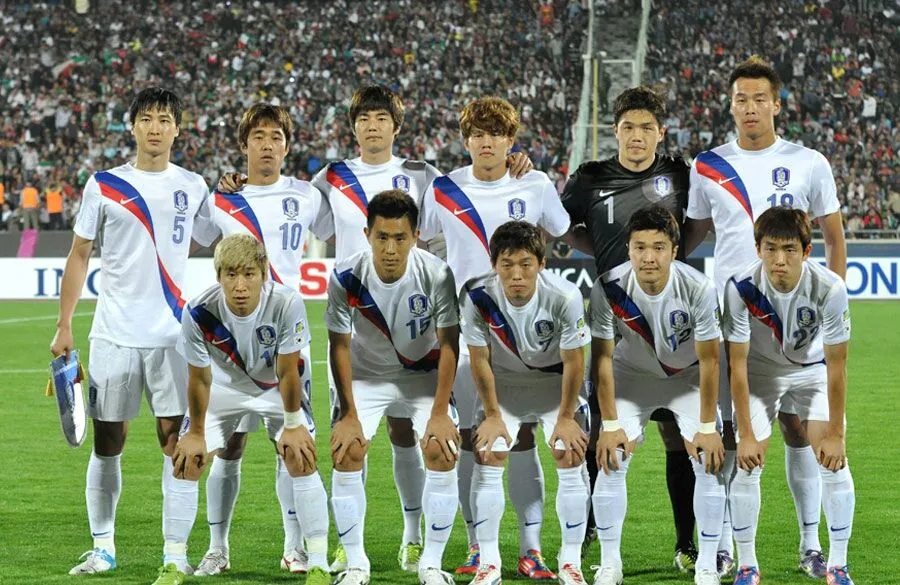
South Korea Football Association Apologizes Over Sexual Favors Scandal Involving Foreign Referees
Summary
The KFA apologized August 13, 2026 after an audit revealed sexual entertainment was provided to foreign referees in 2011-12. Police raided KFA offices on August 6.
8 min read
Table of Contents
- 1 KFA Issues Formal Apology, Insists Conduct Has Stopped
- 2 What the 2016 Audit Found: The Full Scope of the Allegations
- 3 International Reaction: How the Scandal Is Reverberating Beyond South Korea
- 4 Police Investigation: What Happens Next
- 5 Background: South Korea Football and the Referee Question
- 6 What to Watch in the Coming Days
- 7 Related Coverage
- 8 Sources
The Korea Football Association (KFA) issued a public apology on August 7, 2026, after a bombshell government audit report revealed that the organization used corporate credit cards to pay for sexual entertainment services for foreign referees on at least eight occasions between March 2011 and March 2012, a scandal that has reverberated across the international football community and triggered police raids on KFA offices.
The allegations, first made public by South Korean broadcaster JTBC in early August 2026 after documents from a 2016 government audit were disclosed, indicate that KFA officials arranged adult entertainment — including visits to massage parlors and adult establishments in Seoul, Ulsan, Changwon, and other South Korean cities — for foreign referees and officials ahead of and following international matches. South Korea’s Ministry of Culture, Sports and Tourism has since referred the matter for further investigation, and police carried out search-and-seizure operations at KFA offices, including the organization’s headquarters in Cheonan and a former Seoul office in Jongno-gu, on August 6, 2026.
KFA Issues Formal Apology, Insists Conduct Has Stopped
In a statement carried by Yahoo Sports and Reuters on August 7, 2026, the KFA said: “We sincerely apologise for the deep disappointment and concern caused by the various controversies,” adding that “such inappropriate conduct or misuse of corporate cards are absolutely not occurring at present.” The association acknowledged the gravity of the historic misconduct while maintaining that internal culture has since changed.
Separately, BBC Sport and The Independent both confirmed on August 13–14, 2026 that the KFA’s statement was a direct response to mounting domestic and international media pressure, with the scandal now spreading through the international football community. The Korea Herald reported that FIFA and other international football bodies had taken note of the developing situation.
What the 2016 Audit Found: The Full Scope of the Allegations
According to CNN’s reporting on August 11, 2026, the government audit, conducted in 2016 but kept from public view for a decade, determined that the KFA spent approximately 5.6 million South Korean won (roughly $3,950 USD) on sexual entertainment across at least eight separate incidents during the 2011–2012 period. The spending was allegedly disguised in KFA expense records as payments for meals and drinking sessions, with official documents reportedly forged to conceal the true nature of the expenditure.
Star News Korea reported on August 8, 2026 that more than 10 foreign referees and supervisors were involved across seven international matches — a group that included officials overseeing World Cup qualifiers, Olympic qualifiers, and international friendlies played on South Korean soil. The ministry’s investigation, according to Star News, classified the conduct as “organised hospitality at the association level” rather than isolated acts by rogue individuals.
A former KFA official cited by Yonhap News Agency on August 7, 2026 acknowledged that the referees had specifically requested to be taken to adult establishments, and that obliging such requests was described as “a common practice at the time.”
Notably, Star News Korea also reported that South Korea’s national team won five and drew two of the seven matches associated with the hospitality arrangements — a detail that has fuelled speculation online, though no formal allegation of match-fixing has been made and investigators have not publicly stated that match outcomes were manipulated.
| Detail | Data |
|---|---|
| Period of alleged conduct | March 2011 – March 2012 |
| Government audit completed | 2016 (kept private until August 2026) |
| Occasions of alleged misconduct | At least 8 |
| Foreign referees/officials involved | More than 10 |
| Matches tied to allegations | 7 (World Cup qualifiers, Olympic qualifiers, friendlies) |
| Estimated spend on entertainment | ~5.6 million KRW (~$3,950 USD) |
| KFA office police raids | August 6, 2026 |
| KFA public apology issued | August 7, 2026 |
International Reaction: How the Scandal Is Reverberating Beyond South Korea
The Korea Herald reported on August 7, 2026 that the scandal has begun spreading through the international football community, with the story now covered by global outlets including BBC Sport, The Independent, ABC News Australia, and CNN. While FIFA has not yet issued a formal statement, sources within the organization told the Korea Herald that the governing body was monitoring the situation closely.
The timing is especially sensitive for South Korean football, which has spent years rebuilding its global reputation following the controversy around its co-hosting of the 2002 FIFA World Cup — a tournament during which South Korea’s remarkable run to the semi-finals was shadowed by refereeing controversies that generated widespread debate. Critics on social media and in Korean sports media have drawn an uncomfortable line between 2002’s disputed officiating and the now-confirmed pattern of improper hospitality provided to referees in subsequent years.
Football governance experts have noted that the scandal highlights a broader concern about transparency in national football associations and how they manage relationships with match officials. For the KFA specifically, the pressure is now on the current leadership to demonstrate that structural reforms have been implemented since the original conduct occurred.
Police Investigation: What Happens Next
Following the August 6, 2026 raids, South Korean police are expected to interview current and former KFA officials as part of a formal criminal inquiry. The Ministry of Culture, Sports and Tourism has confirmed it has referred the matter to investigators and ordered the KFA to submit documentation related to the expense records in question.
Legal analysts cited in Korean media have indicated that those responsible could face charges related to embezzlement of public funds and document forgery, given that the KFA — as a body governing a national sport — receives a degree of public financing. Whether any criminal charges will ultimately be filed against named individuals remains to be seen, as the alleged conduct occurred more than 14 years ago and the statute of limitations on some potential charges may have elapsed.
2012 period in question, has pledged full cooperation with investigators. It remains unclear whether FIFA’s ethics committee will open its own parallel inquiry, though the organization’s rules give it jurisdiction to investigate national associations in cases of serious misconduct.
Background: South Korea Football and the Referee Question
South Korean football has faced refereeing controversies before. The 2002 World Cup, co-hosted by South Korea and Japan, remains one of the most contested tournaments in the sport’s history, with the host nation’s run to the semi-finals — defeating Spain, Italy, and Portugal along the way — generating allegations of biased officiating that have never fully been put to rest. The KFA and FIFA have consistently denied any wrongdoing, and no formal sanctions were issued at the time.
The newly disclosed audit findings, covering 2011–2012, do not address the 2002 World Cup period directly. However, commentators in both South Korean and international media have noted that the revelation of a systematic pattern of improper hospitality for referees — however small the sums involved — will inevitably reopen those older wounds and invite renewed scrutiny.
South Korea has nonetheless produced a generation of genuinely world-class footballers in the years since, including Son Heung-min of Tottenham Hotspur, who remains one of the Premier League’s most decorated players. The country’s footballing identity has grown considerably beyond any single tournament controversy, and supporters are anxious that this fresh scandal does not become the defining story of South Korean football’s international reputation.
The Korean football community’s response to the scandal has also been mixed. Some former players and officials have called for full transparency and accountability, while others have expressed concern that the decade-old misconduct is being surfaced now for political or institutional reasons, given the timing of the audit’s disclosure so many years after it was completed.
What to Watch in the Coming Days
Several key developments are expected in the days and weeks ahead:
- Police interviews with current and former KFA officials following the August 6 raids on association offices
- A formal response from FIFA, which has been silent so far but faces pressure from member associations to address governance failures at the national level
- Possible parliamentary hearings in South Korea, where lawmakers have previously intervened on sports governance matters
- Whether the KFA will publish the full audit report, which has so far only been partially disclosed through media reporting
- The question of individual accountability — specifically, whether any named officials from the 2011–2012 period will be publicly identified or face charges
As of August 7, 2026, the KFA has not announced any resignations, suspensions, or disciplinary actions against specific individuals. The association’s apology, while notable, stopped well short of naming those responsible or outlining concrete accountability measures — a gap that critics and football governance advocates are already highlighting as insufficient.
For more on recent football controversies, see our coverage of Raheem Sterling’s arrest on suspicion of drug driving and the Leicester City sale by King Power for more than £200 million. Fans interested in the broader football transfer picture can also read about Galatasaray’s €45m bid for Arsenal winger Gabriel Martinelli and Atletico Madrid’s deal to sign Cristian Romero from Tottenham.
Sources: CNN; Yonhap News Agency; Yahoo Sports / Reuters. Reporting by Korea Herald, BBC Sport, and The Independent also contributed to this article.
Related Coverage
- Raheem Sterling Arrested on Suspicion of Drug Driving After Lamborghini Crash on M3
- Leicester City Put Up for Sale by King Power for More Than £200 Million
- Galatasaray Submit €45m Bid for Arsenal Winger Gabriel Martinelli
- Atletico Madrid Agree £34m Deal to Sign Cristian Romero from Tottenham
- Brian Madjo, 17, Becomes Youngest Scorer in UEFA Super Cup History on Aston Villa Debut