The Untold Childhood Stories & Biographies of Football Stars


Leicester City Put Up for Sale by King Power for More Than £200 Million
Summary
✓Reviewed by Laura Bennett LEICESTER, England — August 13, 2026: Leicester City have been placed on the market by their Thai owners, King Power, with the club's full portfolio of assets — including the men's and women's teams, King Power...
7 min read
Table of Contents
- 1 What King Power Is Offering — and What They Want for It
- 2 The Fall From Grace: How Leicester Ended Up Here
- 3 Who Might Buy Leicester City?
- 4 Timeline of Key Developments
- 5 What This Means for Leicester Fans and the Club
- 6 Broader Context: Football Ownership in Flux
- 7 What Happens Next
- 8 Related Coverage
- 9 Related Coverage (Global)
- 10 Sources
Reviewed by Laura Bennett
LEICESTER, England — August 13, 2026: Leicester City have been placed on the market by their Thai owners, King Power, with the club’s full portfolio of assets — including the men’s and women’s teams, King Power Stadium, both training facilities, and Belgian side OH Leuven — listed for sale at more than £200 million, according to multiple authoritative reports published this week.
The Srivaddhanaprabha family, who famously delivered one of football’s greatest fairy tales when Leicester won the Premier League title in 2016, have engaged investment bankers at Citigroup to sound out potential buyers, the Financial Times first reported. The process, now actively under way, marks a dramatic turn in the club’s fortunes — Leicester currently play in League One, English football’s third tier, having suffered back-to-back relegations since 2023.
What King Power Is Offering — and What They Want for It
According to Sky Sports, which updated its coverage on August 13, 2026, a formal sales brochure has been circulated to prospective investors. The package is valued at approximately £224 million for the combined physical assets — the stadium, training grounds, and club infrastructure.
A source close to the sale process told The Athletic, which broke the story on August 11, 2026, that King Power’s initial ambition was to secure around $300 million (approximately £222 million) for the full portfolio. However, the same source acknowledged that a deal is more realistically likely to complete in the region of $200 million (approximately £148 million), reflecting the club’s steep sporting and financial decline since their top-flight days.
The portfolio includes:
- Leicester City men’s first team (League One, 2026–27)
- Leicester City women’s team
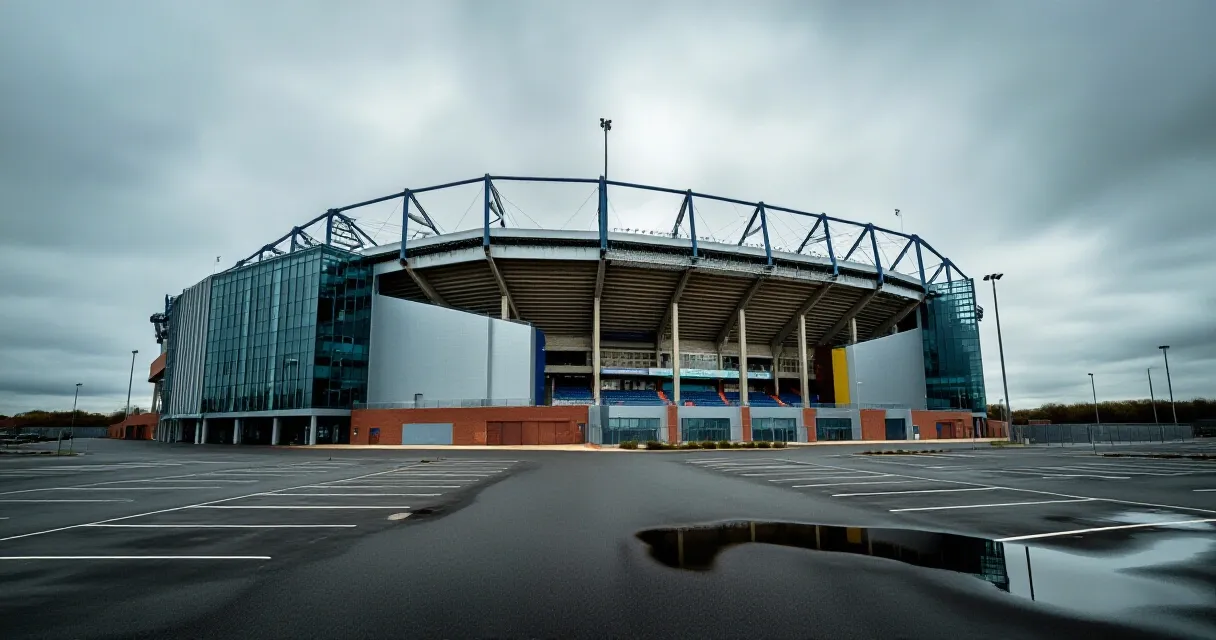
- King Power Stadium (capacity: 32,312)
- Belvoir Drive and Seagrave training facilities
- OH Leuven, the Belgian Pro League side also owned by King Power
The Fall From Grace: How Leicester Ended Up Here
Leicester City’s trajectory since their miraculous Premier League triumph a decade ago has been one of the most dramatic declines in English football history. The club were relegated from the Premier League in 2023, then dropped from the Championship to League One in 2024, and have struggled to mount a sustained promotion push since.
Heavy financial losses compounded the sporting struggles. Premier League clubs as a group have reported multimillion-pound losses in recent years, and Leicester, without top-flight revenue, faced particular pressure. Reports from Yahoo Sports indicate that the mounting costs of running a large club infrastructure on League One attendances and revenue streams proved unsustainable for the Srivaddhanaprabha family’s longer-term plans.
The death of King Power chairman Vichai Srivaddhanaprabha in a helicopter crash outside King Power Stadium in October 2018 had already cast a long shadow over the club. His son, Aiyawatt “Top” Srivaddhanaprabha, took over and has overseen both the club’s FA Cup win in 2021 and its subsequent fall through the divisions.
Who Might Buy Leicester City?
No buyer has been publicly named at this stage. Reports suggest Middle Eastern investment groups and American private equity firms have been among the parties approached, consistent with broader trends in English football ownership. In recent years, clubs from Manchester United to Chelsea and Everton have attracted North American and Gulf-state investment.
The inclusion of OH Leuven in the sales package is notable. Multi-club ownership models have become increasingly attractive to investors, as they allow talent sharing, commercial synergies, and pathways for developing players across different leagues and markets. A buyer for Leicester would therefore be acquiring not just a fallen English club with enormous brand heritage and a famous stadium, but also a functioning European operation in Belgium’s top flight.
Valuation experts have noted that Leicester’s price tag — while significantly below what it would have commanded during their Premier League years — remains substantial for a League One club. The stadium and training ground infrastructure alone represent a significant capital asset in a city with strong economic growth.
Timeline of Key Developments
| Date | Development | Source |
|---|---|---|
| July 22, 2026 | Bloomberg first reported King Power were considering a sale | Bloomberg |
| July 24, 2026 | Reports emerged of tentative Citigroup discussions | Thai Examiner |
| August 11, 2026 | The Athletic published brochure details; $300m ask reported | The Athletic |
| August 13, 2026 | Sky Sports confirmed club formally on the market at £200m+ | Sky Sports |
| August 14, 2026 | Story breaks internationally; Middle East buyers linked | Multiple outlets |
What This Means for Leicester Fans and the Club
For supporters of one of English football’s most storied clubs of the modern era, the news is bittersweet. Many Leicester fans have grown frustrated with the club’s decline but retain deep affection for the Srivaddhanaprabha family, particularly given the extraordinary stewardship that delivered the 2016 title miracle and the genuine grief shared when Vichai died in 2018.
A change of ownership, while uncertain in outcome, could bring fresh investment and ambition. Several English clubs — notably Chelsea under Todd Boehly and Wrexham under Ryan Reynolds and Rob McElhenney — have demonstrated how new American ownership can rapidly transform a club’s trajectory, for better or worse.
On the playing side, Leicester’s current manager faces the challenge of competing for promotion from League One while uncertainty surrounds the ownership structure. Transfer activity is likely to be constrained until a buyer is found and a new strategic direction set.
The club’s women’s team and Academy — both significant investments — will be key considerations for any incoming owner. Leicester’s Academy has produced a number of first-team players in recent years and is regarded as one of the better setups outside the Premier League.
Broader Context: Football Ownership in Flux
Leicester’s situation reflects a wider trend in English football, where the financial gap between the Premier League and the lower divisions has become almost unbridgeable for clubs without top-flight revenue. The parachute payment system provides some cushion for relegated clubs, but once those payments expire — typically after three seasons — clubs face brutal choices about squad investment and infrastructure costs.
Across the Premier League, clubs have been grappling with the consequences of the gambling shirt sponsorship ban, which comes into effect this season — a development that will further squeeze commercial revenues for some sides. For a club like Leicester, operating in League One, such structural changes in English football’s economics serve as a reminder of how quickly fortunes can shift.
The story also connects to broader developments in football transfers and ownership. Readers interested in transfer market activity this summer can follow the story of Brian Madjo’s historic UEFA Super Cup debut for Aston Villa — a club that represents, in some ways, the aspirational path Leicester once walked. The contrast between Aston Villa‘s current European standing and Leicester’s League One reality is stark.
For more on how Premier League clubs navigate the era of high-profile transfers and ownership changes, see our coverage of Galatasaray’s £45m bid for Gabriel Martinelli and Atletico Madrid’s £34m deal for Cristian Romero, which illustrate the financial muscle clubs with stable ownership can deploy.
What Happens Next
The sale process is expected to take several months. Investment banking timelines for deals of this complexity — involving multiple assets across two countries — typically require due diligence periods of three to six months before a formal offer can be tabled and regulatory approvals sought from the English Football League (EFL) and, potentially, Belgian football authorities regarding OH Leuven.
The EFL’s Owners’ and Directors’ Test will apply to any prospective purchaser, requiring background checks and proof of financial sustainability. Any buyer will need to satisfy the League that they can fund the club for at least a season and have no disqualifying criminal convictions or conflicts of interest.
King Power have not issued an official public statement. The club itself has not commented on the sale process. The situation is described by those familiar with the process as active but at an early stage, with no imminent announcement of a completed sale expected.
For Leicester supporters, the coming months will bring a period of significant uncertainty — but also the possibility, however distant, of a fresh start under new ownership that could begin the long journey back toward English football’s elite.
Related Coverage
- Brian Madjo, 17, Becomes Youngest Scorer in UEFA Super Cup History on Aston Villa Debut
- Galatasaray Submit €45m Bid for Arsenal Winger Gabriel Martinelli
- Atletico Madrid Agree £34m Deal to Sign Cristian Romero from Tottenham
- Raheem Sterling Arrested on Suspicion of Drug Driving After Lamborghini Crash on M3
- Football News — Lifebogger Blog
Related Coverage (Global)
- Enzo Maresca Đang Thay Đổi Manchester City Như Thế Nào Sau Thời Guardiola
- Tijjani Reijnders Hampir Pindah ke Al Qadsiah dengan Nilai Transfer €60 Juta dari Manchester City
- Jérémy Doku Prolonge à Manchester City Jusqu’en 2031 : Le Belge S’engage pour Cinq Ans